Retirement regrets: what people wish they’d done differently

Retirement regrets are worth listening to. Not because they should scare you, but because they are a free lesson from people who have already been where you are heading. The good news is that most of them are not bad luck. They come from decisions made in a hurry, or decisions put off for too long, and both can be planned around.
What follows are the common themes people describe when they look back. They fall into two rough groups, going too soon and leaving it too late, plus a handful that catch people out whichever way they go.
Going too soon
Stopping before the money or the plan was ready
A tough year, a restructure or a sudden “that’s enough” moment can tip people into stopping before they have done the sums. The feeling of relief is real. So, for some, is the later worry when savings start to fall faster than expected. A decision made on a bad day is rarely the best basis for the next thirty years.
Missing the people, the purpose and the structure
Many of us do not realise how much work gives us until it stops. The chat at the start of the day. Being needed. A reason to get dressed and leave the house. People who stopped all at once often say it was not the money they missed first, it was the shape and the company.
Not trying it out first
Retirement is one of the biggest changes most of us make, yet many people do it without a trial run. They swap full-time work for no work overnight and find out afterwards whether they like it. A smaller test, such as working a smaller share of your time for a while, can tell you a great deal before the decision is final.
Drawing pensions without understanding the tax
Usually 25% of a defined contribution pension can be taken tax-free, subject to limits. The rest is taxed as income. Taking a large sum in one go, especially while still earning, can push some of it into a higher tax band than you expected. Our pension tax calculator shows how different withdrawals might be taxed. The rules are general, so check your own circumstances.
Leaving it too late
Waiting for perfect numbers
There is always a reason to wait: a slightly bigger pot, a rounder figure, a better moment in the markets. Some people keep waiting for a certainty that never arrives. “Enough” is a judgement, not a number that announces itself.
Spending the healthiest years at work
Healthy life expectancy at birth in the UK is about 61 years, according to the ONS. That is an average, and everyone is different, but it is a sobering thought next to a State Pension age of 66 or 67. Some people describe reaching retirement with plenty of money and less energy than they had hoped for. Our healthy years calculator puts this side by side, and time left vs money left explores the trade in more depth.
Putting off time with people
Parents get older. Grandchildren grow up. Friends move or become unwell. A common regret is not about travel or hobbies at all, but about the ordinary afternoons that were always going to happen “later”.
“One more year”, again and again
Each extra year can make perfect sense on its own. It is only when you look back that a string of them adds up to five or six. If you notice the finish line moving every time you get close, that is worth paying attention to.
Regrets either way
Not talking it through with a partner
Plans made alone can collide with a partner’s plans, hopes or worries. Some couples discover too late that one wanted more time together and the other wanted more time apart. Talking early, and more than once, helps.
Not checking the State Pension forecast
You usually need 35 qualifying National Insurance years for the full new State Pension, currently £241.30 a week, and usually at least 10 for any at all. Gaps can sometimes be filled, but the window for doing so is limited. Checking your forecast takes a few minutes. Read more about National Insurance gaps.
Under-spending in the early years
Careful savers often find it hard to start spending, and some look back wishing they had used more of their money while they were most able to enjoy it. If that sounds familiar, from saver to spender may help.
Having no plan for the time
Plenty of people plan the money carefully and the time hardly at all. The first few weeks feel like a holiday. Then the days start to blur. Thinking about what the time is for matters as much as the budget. See what to do in retirement for ideas.
How a glide reduces retirement regrets
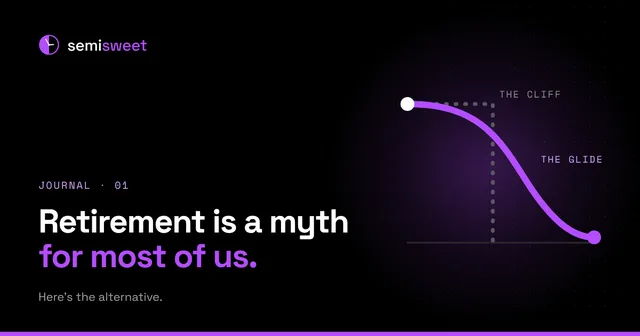
Look at the list above and a pattern appears. Many regrets come from treating retirement as a single, irreversible date. Dialling down gradually softens that in three ways.
- You can test it. Working a smaller share of your time, say 80% or 60%, shows you what more free time actually feels like, and what you miss.
- You keep income and options. Part-time earnings mean your savings have fewer years to cover, and you stay connected to the people and purpose of work.
- You can change course. If it turns out you want more work, or less, a glide is far easier to adjust than a full stop.
As an example, someone on a £45,000 salary in England dialling down to 60% would keep about 64% of their take-home pay. Every employee in Great Britain can request flexible working from day one. Our guide to semi-retirement in the UK covers the options, and the glide planner helps you sketch a route.
Questions to ask yourself now
- Do I know my pension ages and my State Pension forecast?
- Have I checked for National Insurance gaps?
- Do I understand how tax works on what I plan to draw?
- Have I talked this through properly with my partner?
- What will I miss about work, and how could I replace it?
- What is the extra time actually for?
- Could I try a lighter working pattern before stopping completely?
- Am I waiting for a number, or for permission?
Questions people ask
What is the biggest retirement regret?
There is no single answer, and regrets run both ways. Common themes people describe include stopping before the money or the plan was ready, staying in full-time work through their healthiest years, not checking their State Pension forecast, and having no real plan for the extra time.
Do people regret retiring early?
Some do, usually because the money ran tighter than expected or because they missed the people, purpose and structure that work gave them. Others are glad they went when they did. Trying a lighter working pattern first can show you which camp you are likely to be in.
Is it better to retire too early or too late?
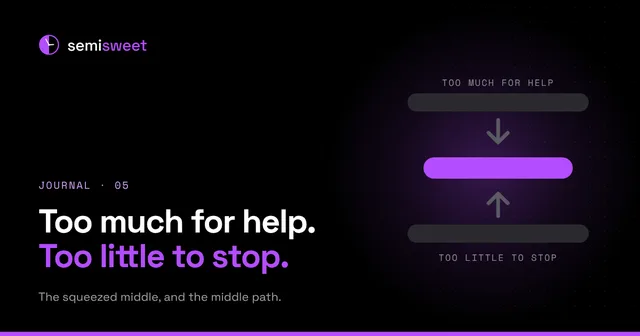
Both carry risks. Going too soon can strain your savings and leave a gap where work used to be. Leaving it too late can cost healthy years you cannot get back. Dialling down gradually lets you balance the two rather than betting everything on one date.
How can I avoid regrets when I retire?
Get the key facts first, such as your pension ages, State Pension forecast and any National Insurance gaps. Talk it through with your partner, plan what the time is for, and consider testing life with less work before stopping completely. MoneyHelper and Pension Wise offer free, impartial guidance.
Guidance, not advice. This article shares general information and opinion, not financial advice. For free, impartial help, visit MoneyHelper.
Sources: ONS: Health and life expectancies · GOV.UK: The new State Pension · GOV.UK: Voluntary National Insurance · GOV.UK: Flexible working · MoneyHelper: Pension Wise