What to do in retirement (or when you start working less)

“What will I actually do all day?” It is one of the most common questions people ask about retirement, and one of the least planned for. Working out what to do in retirement matters just as much if you are not stopping at all, but simply working less. When you dial down, the extra time arrives in instalments: a lighter week here, a shorter day there. That is a real advantage. You get to experiment before the time is all yours.
This is not a list of clichés. It is a set of ideas, grouped by what they give you, with a few thoughts on how to choose.
Why “what will I do?” matters
Work quietly supplies three things most of us take for granted: a reason to get up, a shape to the week and people to talk to. When work shrinks, those don’t vanish, but they stop arriving automatically. Time with nothing in it can feel lovely for a month and flat after six. If that worry is part of what is holding you back, scared to retire? the fears nobody talks about looks at it more closely.
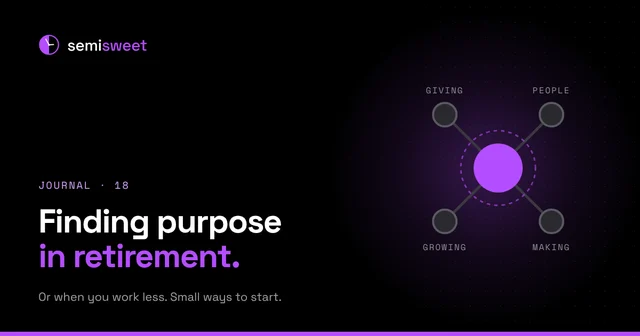
The good news is that purpose, structure and people can all be rebuilt on your own terms. Here are some places to look.
Ideas for what to do in retirement
People
Relationships are often the first thing to benefit, and the first thing to fade if left to chance. Many friendships get squeezed by decades of busy working weeks. Now there is room to bring them back.
- Pick up the phone to the friends work pushed aside, and suggest something regular rather than a one-off.
- Spend unhurried time with family, without one eye on the clock.
- Help with grandchildren, if that is part of your life, in a way that suits everyone.
- Join a community group: a choir, a walking group, a book club, a residents’ association.
Body
Moving more does not have to mean a gym membership. The best activity is one you will keep doing because you enjoy it. If you have a health condition, check with a professional before starting anything new.
- Walking, from a daily loop round the park to longer routes at weekends.
- Swimming at a local pool, or outdoors in summer if that appeals.
- Cycling, on quiet lanes or towpaths.
- Gardening, or taking on an allotment.
Mind
Learning for its own sake, with no exam at the end, is one of the quiet pleasures of having more time.
- Learn a language, perhaps one linked to a place you want to visit.
- Take a course through a local college or online, on anything from history to photography.
- Look for local learning groups run by and for people no longer in full-time work, where members share what they know.
- Read more widely, or join a discussion group to talk about it.
Making
Making things gives you something to show for the day, which many people miss when work ends.
- Cooking properly: new cuisines, bread, preserves.
- Crafts such as woodwork, knitting, pottery or sewing.
- DIY projects you never had the weekends for.
- Writing, whether that is family history, a blog or the novel.
- Music, picking up an old instrument or starting a new one.
Giving back
Being useful is a big part of feeling purposeful. If you have spent years as the one who provides, giving time and experience can be a natural next role. From provider to what? explores that shift.
- Volunteer with a local charity, food bank, hospital or school.
- Mentor someone earlier in their career.
- Become a trustee or help run a club you already belong to.
Earning a little
Some people find that a small amount of paid work keeps them sharp and connected, and the income takes pressure off savings. It might be part-time hours in your current role, consultancy in your field or a small project you have always wanted to try. If you are weighing up a lighter role, the part-time pay calculator shows what different working patterns could mean for your take-home pay.
- Part-time hours, in your current job or a new one.
- Freelance or consultancy work using your experience.
- A small business or side project built around a hobby.
Going places
Flexible time opens up travel at quieter times of year, and makes it easier to explore closer to home too.
- Travel off-peak, when places are calmer.
- Take slower trips: longer stays, trains instead of planes.
- Explore your own region properly, from museums to coastal paths.
How to choose
Try things while you are still working. This is the quiet benefit of a glide. If you dial down to a share of your time, use some of the freed-up hours to test ideas. You will arrive at full retirement with interests and friendships already in place.
Follow energy, not obligation. Notice what you look forward to and what you dread. If an activity feels like a duty after a few weeks, it is fine to drop it.
Use a simple rule of thumb. Aim for one thing for your body, one for your mind and one with other people. It is not a strict formula, just a useful check that your week has some balance.
Mix structure and freedom. A few fixed points in the week, such as a class, a volunteering shift or a regular walk, give shape. Leave plenty of space around them for whatever comes up.
Think in decades, not days. What you want at 60 may differ from what you want at 75. Some ambitions, like long walking trips, are easier to do earlier. Writing a job description for the next 10 years can help you sequence them, and the healthy years calculator is a useful nudge about timing.
If it doesn’t feel good straight away
Adjusting takes time. The first weeks of extra freedom can feel strange, and it is common to feel restless, bored or a little lost before new routines settle. That is not a sign you got it wrong. Give it a few months, keep trying things and be kind to yourself.
If a low feeling hangs around for weeks, or begins to affect your sleep, appetite or relationships, let your GP know. A big life change is a perfectly good reason to ask for support.
Questions people ask
What do people do when they retire?
Most people mix a few things: more time with friends and family, staying active, learning something new, making or fixing things, volunteering, travelling and, for some, a little paid work. There is no single right answer, and the mix usually changes over the years.
How do I fill my time in retirement?
Start with a few fixed points in the week, such as a regular class, a walk with a friend or a volunteering shift, then leave the rest free. Try things while you are still working so you arrive with interests already in place, and keep the ones that give you energy.
What are good hobbies for retirement in the UK?
Popular choices include walking, swimming, cycling, gardening or an allotment, learning a language, local learning groups, cooking, crafts, DIY, music, writing, volunteering and exploring the UK off-peak. A good starting mix is one hobby for your body, one for your mind and one that involves other people.
How do I find purpose when I stop working full-time?
Purpose often comes from being useful, being connected and making progress at something. Volunteering, mentoring, caring for family, learning a skill or running a small project can all supply it. Dialling down gradually gives you time to test what feels meaningful before work stops entirely.
Guidance, not advice. This article shares general information and opinion, not financial advice. For free, impartial help, visit MoneyHelper.