Retiring as a couple: timing, money and time together

When one person thinks about working less, it is a big decision. When two people do it together, it becomes a shared project with two sets of hopes, two pension pictures and, often, two different ideas of what a good day looks like. Retiring as a couple can be one of the best chapters of a relationship. It goes more smoothly when you talk early, and more than once.
This article looks at the main things couples work through, from timing and money to space and roles at home, and how a gradual glide can make the change easier for both of you.
Two timelines, not one
Couples often assume they will stop at the same time. In practice there are good reasons why that may not happen. There may be an age gap. Your pension ages may differ: the normal minimum age for taking a personal or workplace pension is 55, rising to 57 on 6 April 2028, and State Pension age is 66 now, rising to 67 for anyone born between 6 March 1961 and 5 April 1977. One of you may love your work and the other may be ready for a change.
A useful first step is to put both timelines side by side. Our pension age checker shows the key dates for each of you, and the glide planner helps you sketch how working less might fit around them.
Together or staggered?
Some couples love the idea of stopping together and starting the next chapter on the same day. Others find a staggered approach works better. One person dials down first, gets used to it, and the other follows. A staggered start can also keep some income coming in while savings have fewer years to cover. Neither is right or wrong. What matters is that it suits you both.
The money conversation
Money is often the hardest topic to start and the most useful to finish. A few things are worth knowing.
- Tax is individual. Each of you has your own personal allowance, currently £12,570, and your income is taxed separately. How and when each of you draws pensions can affect the total tax you pay as a household.
- The State Pension is individual too. The full new State Pension is £241.30 a week, and each of you builds your own entitlement through your National Insurance record. It is worth both of you checking your forecasts and looking for any National Insurance gaps.
- Shared costs don’t double. The Retirement Living Standards suggest a couple might need about £22,500 a year for a minimum lifestyle, £45,400 for moderate and £62,700 for comfortable, compared with £13,900, £32,700 and £45,400 for one person. They are broad benchmarks outside London, not targets.
Our retirement budget calculator can help you build a shared picture. If you are married or in a civil partnership and one of you earns less than the personal allowance, the Marriage Allowance may also be worth looking into. These rules are general, so check your own circumstances. MoneyHelper offers free, impartial guidance, and Pension Wise offers free appointments for people aged 50 or over with a defined contribution pension.
Time together, and time apart
Many couples look forward to more time together. Most also find they need some time apart. When both of you are at home far more than before, small things can loom larger: who has the kitchen table, whose friends come round, how quiet the house is in the morning.
It helps to talk about this before it becomes a source of friction. How much time do you each want together? What do you each want to do on your own? Are there interests you would like to share, and ones you would rather keep for yourself? There is nothing unromantic about planning for space. It often makes the time together better.
Who does what at home
Working patterns shape a lot of household routines. When one or both of you works less, it can be a good moment to revisit them: chores, cooking, family responsibilities, caring for parents or helping with grandchildren. Assumptions that worked for years may not fit the new shape of your week. A calm conversation now can save a lot of quiet resentment later.
Different hopes for the next chapter
One of you may dream of travel; the other may want to stay close to home. One may want a new challenge; the other may want rest. Differences like these are normal. The aim isn’t to agree on everything, but to understand what matters most to each of you and find a pattern with room for both.
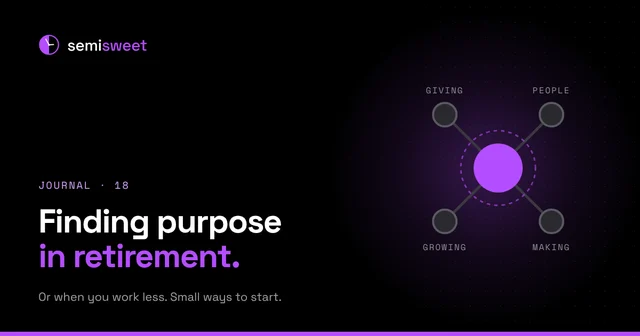
It can help for each of you to answer a few questions separately, then compare notes. What would make a good week? What are you most looking forward to? What worries you? What would you regret not doing? Finding purpose in retirement has more prompts.
How dialling down helps couples
When you both stop all at once, you change everything in one go: income, routine, time together and the shape of every day. Dialling down gradually gives you a gentler run at it.
- You can test it together. Working a share of your time, say 80% or 60%, shows you what more time at home actually feels like for both of you.
- You keep income while you adjust. For example, someone on a £45,000 salary in England dialling down to 80% would give up about £510 a month in take-home pay. The part-time pay calculator shows your own figures.
- You can stagger without a cliff edge. One of you can dial down first, the other later, with plenty of room to adjust along the way.
Every employee in Great Britain can request flexible working from day one. See how to ask to reduce your hours.
Questions to talk through together
- When would each of us ideally like to start working less?
- Do we want to stop together, or stagger it?
- Have we both checked our pension ages and State Pension forecasts?
- What will we spend, and what matters most to spend it on?
- How much time do we each want together, and apart?
- Who will do what at home?
- What is each of us most looking forward to, and most worried about?
Questions people ask
Should couples retire at the same time?
There is no right answer. Some couples love stopping together; others find a staggered approach works better, especially with an age gap or different pension ages. Talking through what each of you wants, and trying a lighter working pattern first, can help you decide.
How much does a couple need to retire in the UK?
The Retirement Living Standards suggest a couple outside London might need about £22,500 a year for a minimum lifestyle, £45,400 for moderate and £62,700 for comfortable, after tax. These are broad benchmarks, not targets. Your own spending is the best guide.
Do couples get two State Pensions?
Yes. The new State Pension is paid to each person individually, based on their own National Insurance record. Each of you can check your own forecast on GOV.UK, and each may have different State Pension ages.
What if my partner wants to retire and I don’t?
It is more common than people think. Talk about what each of you is hoping for, what worries you, and how your days would look. A gradual approach, where one or both of you dials down rather than stopping, can give you room to find a pattern that works for you both.
Guidance, not advice. This article shares general information and opinion, not financial advice. For free, impartial help, visit MoneyHelper.
Sources: GOV.UK: The new State Pension · GOV.UK: State Pension age · GOV.UK: Income Tax rates and allowances · GOV.UK: Marriage Allowance · Retirement Living Standards · GOV.UK: Flexible working