Retirement is a myth for most of us. Here’s the alternative.

The retirement we were sold
The picture is familiar: a long career, a leaving do, then decades of freedom paid for by a generous pension. For a generation with final salary schemes and cheaper housing, that picture was often real.
For many of us in our 50s now, it is not. Final salary pensions have largely been replaced by defined contribution pots that depend on how much went in and how markets behaved. The State Pension age has moved from 65 to 66, is moving to 67, and is under review for 68. The finish line keeps moving away.
The maths most people avoid
To spend at the moderate Retirement Living Standard of £32,700 a year, a single person on the full State Pension needs a pension pot of roughly £630,000, on a 4% withdrawal rate. And that assumes the State Pension has already started: in the years before 66 to 68, the pot has to cover even more.
That figure comes from our how much do I need to retire calculator, using the June 2026 living standards and 2026 to 2027 tax. For a couple on two full State Pensions, it is around £634,000 between them. Those numbers are well beyond what many people in their 50s have saved.
So the usual advice is to keep working full-time until the numbers work. But that has a cost too.
The cost of waiting
On Office for National Statistics figures for 2022 to 2024, a 55-year-old in the UK can expect around 16 to 17 more years in good health, on average. That takes good health to about 71 or 72. If your State Pension starts at 67, that leaves only four or five healthy years after it, on average.
Averages hide a lot, and plenty of people stay well for far longer. But the shape is clear: if you wait for the money to be perfect before you take your time back, you may be spending your best years waiting.
How many healthy summers are likely ahead for you?
Count my summersThe alternative: a glide
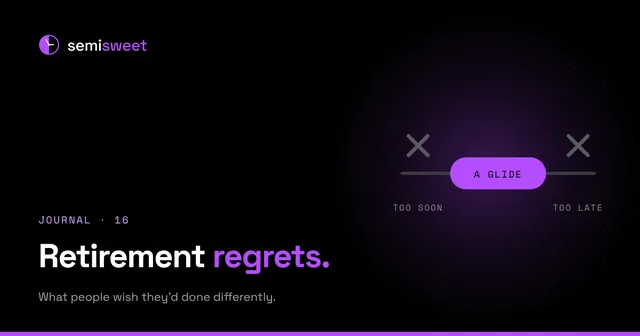
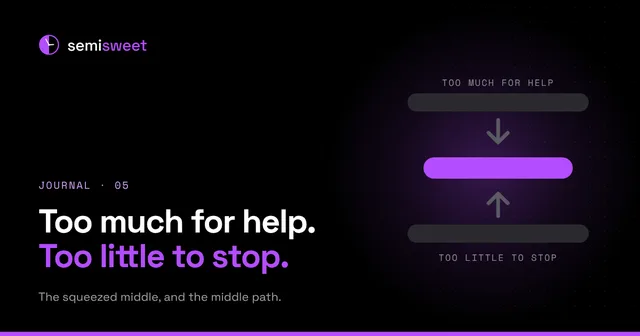
Between the cliff edge and working full-time to the very end, there is a middle path. Dial down gradually over several years: fewer days, shorter days or a lighter role. It changes the maths in three ways at once.
- You keep an income. Part-time pay covers much of what you spend, so your pension pot does not have to do all the work.
- Your pot keeps growing. Every year you are not drawing on it is another year it can grow, and another year of contributions.
- Your take-home falls by less than your hours. Because the pay you give up is the most heavily taxed slice, cutting your hours by 40% typically keeps around two-thirds of your take-home pay. Try it in the part-time pay calculator.
And crucially, you get time back now, while you are healthy enough to use it, rather than in one lump at the end.
Why this is hard
If the glide is so sensible, why don’t more people do it? Because the obstacles are rarely about spreadsheets. They are about identity, guilt, fear of what people will think, and the quiet voice that says “one more year”. We wrote about those in Scared to retire? The fears nobody talks about.
Questions people ask
Can most people afford to retire early in the UK?
Many cannot afford to stop work completely in their 50s or early 60s. A moderate lifestyle for one person costs about £32,700 a year on the June 2026 Retirement Living Standards, which needs a pension pot of roughly £630,000 alongside a full State Pension, on a 4% withdrawal rate.
What is the alternative to full retirement?
Semi-retirement, or a glide: reducing your working time gradually over several years. Part-time pay covers part of your spending, your pension keeps growing, and you get time back while you are healthy.
Guidance, not advice. This article shares general information and opinion, not financial advice. For free, impartial help, visit MoneyHelper.
Sources: Retirement Living Standards · ONS: Healthy life expectancy, UK · GOV.UK: State Pension age